
Following recent storms and widespread power cuts, Alison Macklin, Plunkett UK’s Community Business Manager, reflects on the importance of community-owned businesses when everyday life is disrupted.
Storm Austen and Storm Boelo have brought widespread power cuts and disruption to communities across the UK, an early reminder of the challenges the colder months can bring.
For me, several long power cuts over the weekend brought home just how valuable a community business can be.
Living in a rural community, I know the importance of being prepared. We had our log burner and candles to hand, but there was something especially welcome about heading to our local community-owned pub, The Rising Sun in Woodcroft, to use its Wi-Fi to let family know we were OK.
We could take our dog, enjoy a lovely warm meal in the light, catch up with friends and play board games before returning to our dark, powerless home for the rest of the evening.
It was a simple outing, but it reminded me that a community pub offers much more than food and drink. When our usual routines were disrupted, it gave us somewhere familiar to go and people to spend time with.

Keeping cosy in the winter at Ty’n Llan, a community pub in north Wales
Everyday connections
That is the value of community businesses. They are not just shops, pubs or cafés: they are places where people meet, share knowledge and skills, and feel part of their community. Those everyday connections can become particularly important during a power cut, heavy snow, a flood or another local emergency.
My weekend experience also took me back to running a community shop. I remember sledging in on a black bag to make sure the shop could open for essentials, while customers were coming down on skis! It is a memory that has stayed with me. When an everyday journey suddenly becomes a challenge, having somewhere local to pick up what you need really matters.
Community shops can help with practical supplies such as batteries, candles and matches when normal routines are interrupted. There is room for a few small comforts too: a favourite bar of chocolate, perhaps, or a bottle of screw-top red wine that saves hunting for a corkscrew in the dark.
Sometimes it is the combination of essentials and a friendly conversation that makes a difficult day a little easier.
Community in action
We’ve seen this in action over the past few days, with community-owned pubs that are Plunkett members stepping up to help residents affected by the storms and power cuts.
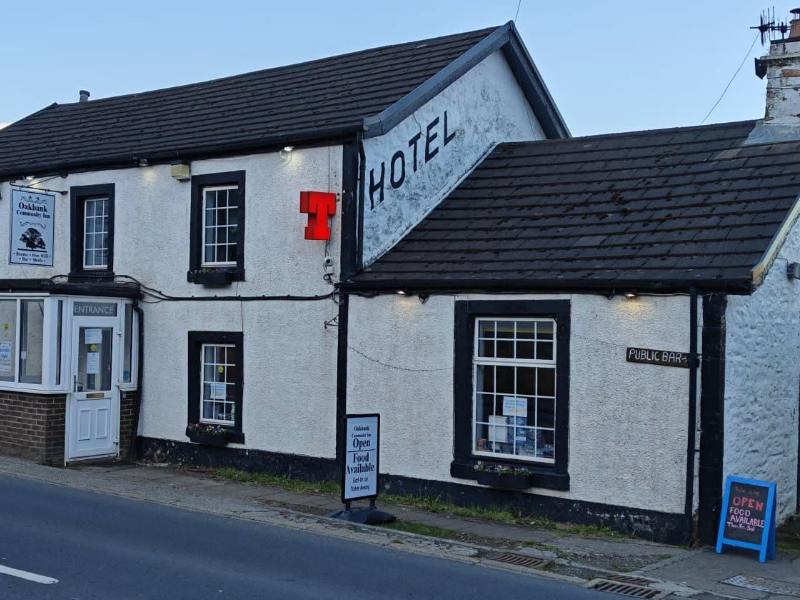
At the Oakbank Inn in Sandbank, Argyll and Bute, there’s been hot soup and a warm welcome, alongside somewhere to charge devices and work. In New Luce, Dumfries and Galloway, the Kenmuir Arms has been arranging a generator so it can provide hot food, and has offered to deliver meals to villagers unable to leave their homes.
The Samson Inn in Gilsland, on the Cumbria–Northumberland border, has also been offering support to local residents.
Others will have done the same too, and it’s a reminder that when everyday services are disrupted, having a community-owned business nearby can make a real difference – not just as somewhere warm to go, but as a place where people look out for one another.
Local knowledge
During Covid, we saw the value of those local connections in a different way. People knew who might need extra support. That knowledge, built through everyday conversations and familiar faces, is an important part of what makes a community business more than somewhere to shop.
Knowing your community means knowing when someone might need a little extra help.
Local knowledge can be useful in other ways too. A shop may have helpful contact numbers or know where to direct someone for support. It might have a phone that works during an outage, depending on its equipment and network.
None of these things should be taken for granted, but knowing what is available locally can make a difference.
Practical support
The building itself may have a part to play. Depending on the situation, and whether it can open safely, a community business might offer a place to meet, toilets, lighting or emergency lighting. Some pubs have backup generators, although facilities vary.
A familiar meeting point can also help people collecting or bringing in supplies to find one another, while resources already on the premises, such as high-visibility jackets or first aid kits, may be useful.
Where it is safe and agreed with the emergency services, the premises could also provide a meeting point or car parking for emergency vehicles. Businesses with a defibrillator on site offer another valuable community resource.
Not every business will have all these facilities, and that is fine. The important thing is recognising what each can realistically offer.
At Plunkett UK, we see the difference community ownership makes every day. We help rural communities establish and run businesses that do much more than provide goods and services. From the first idea to long after opening, our advice and support helps these businesses become sustainable, welcoming places that are there for their communities when they need them most.
Being resilient
For me, this is what community resilience looks like: not only the things we keep at home, but the places and connections around us.
If you are involved in a community business, take a moment to think about what you could safely offer during a disruption and let local people know.
You might also find it useful to read about lessons learned from Plunkett’s climate resilience and adaptation webinar, held in partnership with Verture, in February 2026.
You are not just a shop, just a pub or just a café. A warm welcome, a meal and a familiar face can mean a great deal when things are not going to plan.
So, when the government encourages us all to prepare, I am happy to say that I think most of our community businesses are already on the right track. They know their communities, bring people together and understand the difference a little practical help can make.
There is always more to think about, but there is also a great deal to celebrate in what is already happening – sometimes with a pair of skis and a black bag!