
Hear from our Policy Manager, Ian Young, who provides an overview of the key policy announcements affecting rural community businesses and how Plunkett is representing members’ interests.
Representing Rural Communities at the Labour Conference
Autumn tends to be the busiest time of year for those of us in policy, with party conference season typically followed by an Autumn Budget. This year was no different, although it included a summer change of Prime Minister to set the table.
I attended the Labour Party Conference in Liverpool at the end of September. With Labour in Government and a number of new ministers in post, it was an opportunity to gain insights into the Government’s policy direction, speak to parliamentarians about the benefits of community ownership and catch up with a number of stakeholders across the rural, community ownership and impact economy sectors at events and receptions.
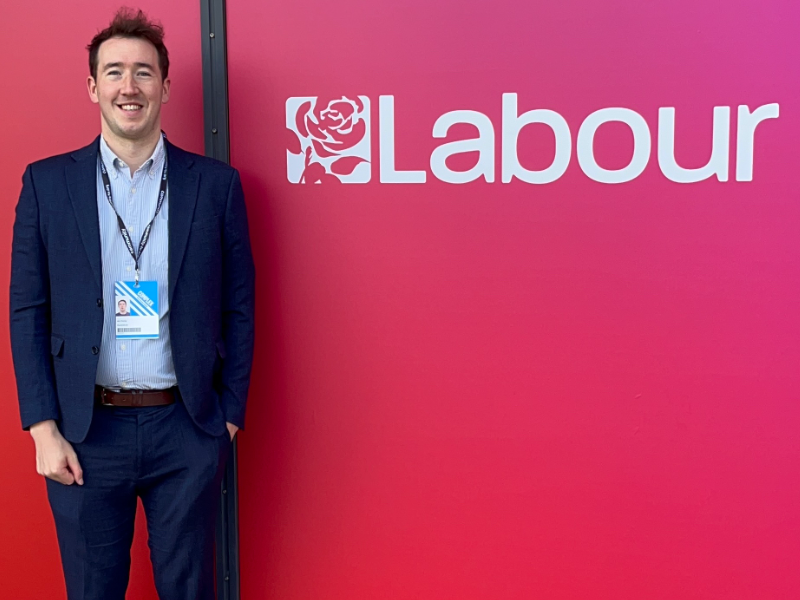
Ian at the Labour Party Conference
My main takeaway was that co-operatives and community ownership remain firmly on the Government’s agenda. Community power featured prominently in discussions, and events run by organisations like Power to Change and the Co-op Party were well-attended and generated interesting discussions on how to execute what is clearly a government priority.
While the energy, optimism and continued commitment to the sector in the halls and reception rooms was encouraging, one upside would have been to hear more from the Prime Minister on rural issues. His speech paved a path for some quite radical changes to the UK’s foreign policy, electoral system and care system – but Plunkett has been beating the drum to ensure that the specific needs of rural communities are met, and there was no mention of this in his speech. Our role remains to ensure that the Prime Minister’s obvious commitment to community ownership isn’t realised in a one-size-fits-all manner which is shaped around urban contexts.
Enjoy this video by Ian to find out more about the conference.
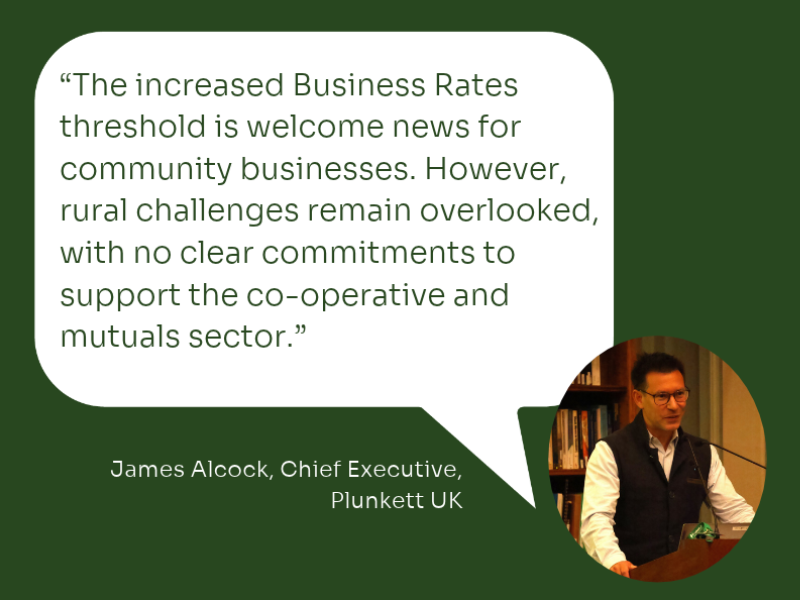
Our Chief Executive, James Alcock’s response to the budget.
The Budget: Community ownership remains on agenda
The next piece of the puzzle was Chancellor John Healey’s Budget on 28 October. We had high hopes for progress in combatting some of the policy challenges we have raised since the new Prime Minister and Chancellor team came into post.
The Chancellor’s speech continued to emphasise the Government’s desire to drive economic growth across the country and recognised that many businesses are facing higher operating costs. For rural community businesses, there were a small number of announcements that may provide some relief, although many of the challenges facing the sector remain unresolved.
One of the most significant changes is the increase in the Business Rates relief threshold from £12,000 to £18,000 rateable value. An initial analysis of Plunkett’s membership suggests that around 50 member businesses could be exempt from paying Business Rates from April as a result, although some of these businesses may already receive relief through local authority schemes.
This benefit was welcomed by some of Plunkett’s members, although it was noted that it all it does is take away from a cocktail of government-imposed costs. Some of our members, in response to the Chancellor’s measures, noted that the announcement of minimum wage increases would put additional pressure on staffing and opening hours, and another said that they were receiving a rates exemption, but that any costs saved would be immediately diverted towards rising wages.
Community Right to Buy Funding
During the Plunkett Member Forum in early November, we sought feedback from members on what they thought the Budget was missing. The full documentation published after the Chancellor’s speech referenced the Government’s previously announced £65 million as part of the investment package designed to revamp high streets across the country. This fund is to help communities rescue and revive important local assets, such as pubs, sports clubs and other buildings at risk of closure and builds on work previously supported through community ownership programmes. However, members continue to report that the funding environment remains difficult to navigate. Feedback consistently highlights the loss of the Community Ownership Fund as a significant gap, and many would welcome a dedicated successor programme that provides clear and accessible funding routes for community businesses.
Co-operative Sector Championed
Outside the funding announcements themselves, there was also a positive signal for the wider co-operative sector with the appointment of Andrew Pakes MP (Peterborough) as the Government’s new Co-operatives and Mutuals Champion. The role is intended to strengthen links between government and the sector and identify opportunities for future growth. We have sought a meeting to ensure the experiences of rural community businesses are reflected in those discussions. Our recently-launched 2031 strategy lays out the importance of us being able to represent your experiences, needs and challenges as part of a wider Plunkett movement, and our relationship with government will form a vital part of that.
Your voice matters: help us represent rural community businesses
While the Autumn brought a bold vision for reform and a Budget that offered some welcome signals, there is still limited detail on how government plans will support community ownership in rural areas. Plunkett UK will continue to champion the interests of rural community-owned businesses, ensuring their voices are heard as these policies develop.
We encourage our members to share the opportunities and challenges they are experiencing on the ground, helping us build a stronger case for the support communities need to thrive. If you have concerns, insights, or examples of how policy changes are affecting your business, please get in touch with me by emailing policy@plunkett.co.uk.