
Misty Bower, Plunkett’s Community Business Adviser, highlights 3 Key Lessons from our Webinar, ‘How to Be Great at Community Engagement’
Did you know that community engagement is essential for a community business to succeed? The Better Business Report 2024 quantifies its significance, stating that ‘the number of people involved’ is a core contributing factor to ‘the resilience and overall success of community-owned businesses’.
In our webinar: ‘How to REALLY engage your community’, we show you how to tap into that most powerful asset – your community. Whether you’re just starting out or a well-established community-owned business, you’re going to want to check it out!
Here we consider 3 important take aways from the webinar
1. Know your community
Before you can mobilise your community, you need to understand them. Who are they? What are they like? What do they care about?
It’s important to go beyond your personal knowledge or initial assumptions, giving you a depth of understanding about the make-up of your community that will enable you to hear from the diversity of voices across your community.
Try this: Start with a map of your local area. Mark boundaries, facilities, businesses, residential areas, activities that bring people into the village and places where people gather. Then add key stats, such as number of households and age groups represented (the census can help with this).
TOP TIPs: Use the knowledge you’ve gleaned about your community to think about how to make any engagement with them applicable and accessible to YOUR community. Ask how can you reach everyone?
Good example: Using community mapping, The Amulet Theatre, Shepton Mallet, identified that some parts of their community lived further out, so they took a stall at the popular monthly farmer’s markets to meet and engage with them

Representatives from The Amulet Theatre taking to the monthly farmers market
2. Make a plan (and make it fun!)
Community engagement shouldn’t feel like a chore – it can be energising, motivating, and even fun!
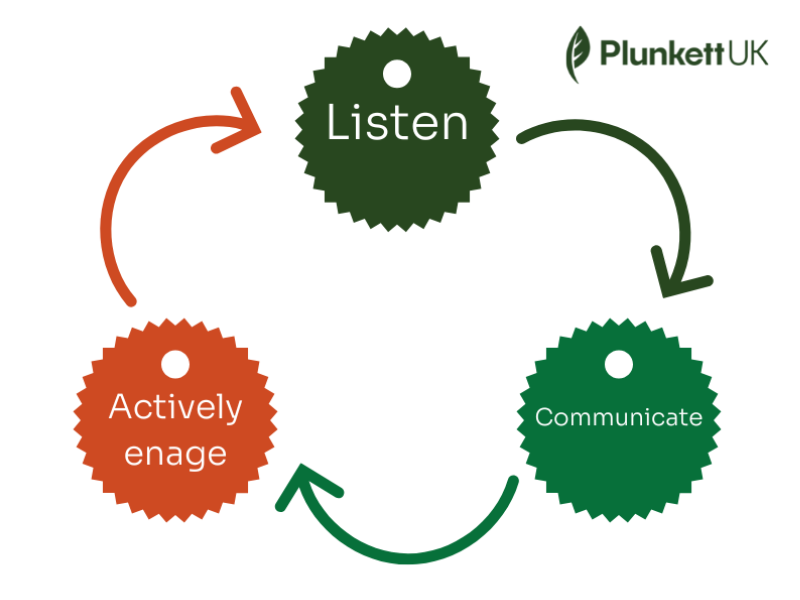
By using the 3 key principles: Listen, Communicate and Actively Engage AND by planning ahead, you can make sure that you give everyone a chance to have their say, keep them informed and invite them to take ownership.
Try this: Be creative. Use your community mapping results to inform creative ideas that would engage your community, exploring what might increase footfall or get the practical jobs done. From design competition for families, to tasting nights for foodies or street ambassadors to speak to housebound residents – try it and see!
Top Tip: Download our new ‘Community Engagement Template’ to help you create a plan. With space to record the who, why and how of your interactions it will help you be consistent and share the responsibility
Good example: The Six Bells, Peterstone, have used a variety of ways to get their message across, from music events to videos on social media with a personal touch, giving the breadth of their community ways to hear the message and get involved.
3. Don’t stop – community engagement is for every stage of the business
A common mistake with community engagement, is thinking it ends when the doors to your community business open. In reality, this is just the beginning! You need the community at every stage of your community business to build strength and capacity and thus longevity of the business.
Get these things in place early on and keep them up:
• Open and transparent feedback loops
• Regular and simple ways to keep the community informed:
• Build loyalty with a strong brand and opportunities for participation
Try this: Welcome new residents to your community with a welcome pack, you could include: a newsletter, flyer menu with contact details and opening times, event invite, packet of local biscuits etc
Top tip: Assign one person or a small team to take responsibility for community engagement. Ask them to create a plan and be accountable to the Committee.
Good examples: Both Farmborough Community shop and Fittleworth Stores have created excellent websites that provide their communities with clear information and ways to get involved.
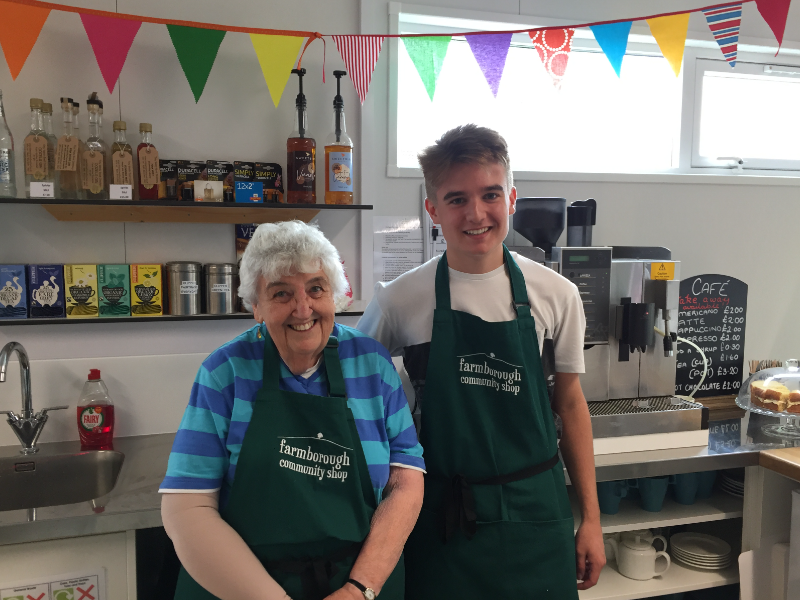
Volunteers at Farmborough Community Shop
Next Steps
Community engagement is not a one-off activity. It should be continuous, inclusive and intentional. When done well, it can transform your community business into a shared success story, creating stronger local connections, greater support and long-term sustainability.
Whether you are starting a new community business or looking to strengthen an existing one, take the time to understand your community’s needs, listen to local voices, communicate openly and involve people at every stage of the journey.
If you’re wondering where to begin, or looking for practical ways to improve your approach, join our next webinar on Monday 14 September, 12.00pm to 1.00pm.
During the session, I will introduce Plunkett’s Community Engagement Template and explore the why, what and how of effective community engagement. You’ll come away with practical tools and insights to help your community business benefit from the enthusiasm, knowledge and support that local people can offer.
The webinar is free to attend and open to everyone, so be sure to book your place.