
Plunkett’s Policy Manager, Ian Young, shares an update on how the team are working with government to support our community business members
Parliament is in recess and the UK has a new Prime Minister. Andy Burnham’s ascension will see a new political philosophy in Number 10 (and, Number 10 North), but his commitment to Labour’s 2024 manifesto will, I imagine, limit any upheaval. This new government doesn’t change our priorities that conversations with our members have shaped, but a new raft of ministers creates the opportunity to make a fresh case for community business and the needs of our members.
We have reached out to all relevant ministers who are in new roles, outlining our policy priorities and seeking the opportunity to meet with them.
Keep reading for the latest policy developments and updates for our members.
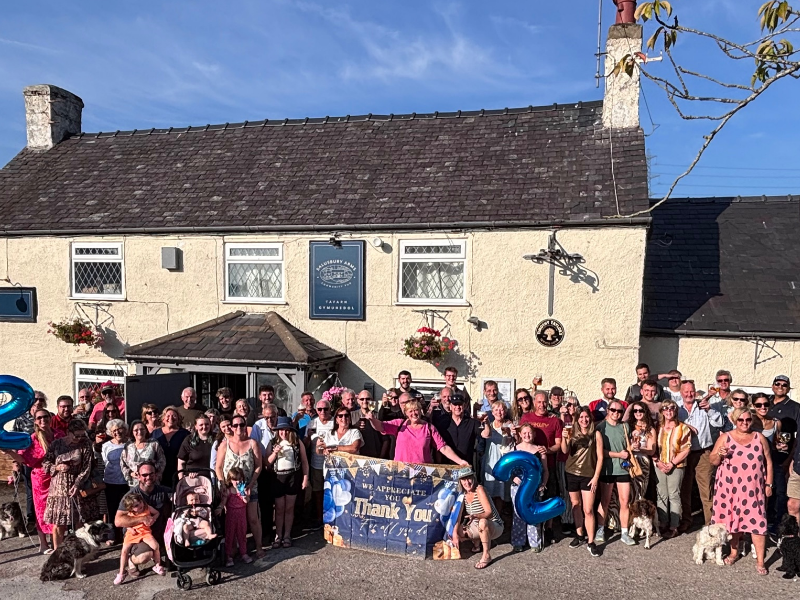
The Salusbury Arms, Tremeirchion (Wales)
Community Right to Buy
In April, the English Devolution and Community Empowerment Bill received Royal Assent, enshrining into law the right for community groups in England to purchase Assets of Community Value (ACVs) at an independent valuation, and giving them a 12-month moratorium to secure funding. This was followed by the announcement in June of a £61 million Community Right to Buy Fund. Plunkett is in discussions with civil servants about the design of this fund, with the hope of securing the ringfencing of a portion of the fund for rural communities.
In Wales, the new Plaid Cymru government has also announced its first phase of legislation, which includes Wales’ own community right to buy scheme, and we are working with Welsh partners to help make recommendations on its delivery based on our learnings supporting the English legislation.
Rural proofing
The Welsh Government also committed to ‘rural proofing’ government policy in Wales. This involves creating policies which ensure that legislation does not exclude rural areas. The same thing is happening at Westminster, where the Department for the Environment, Food and Rural Affairs (DEFRA) published its Future of Rural England Report, in coordination with other departments, to lay out how the same will occur in England. Plunkett fed into this report as part of our wider work on rural policy.
Business rates
Andy Burnham announced last week that a Business Rates cut of 20 per cent would be given to pubs, social clubs and live venues in England. This is positive news because of the importance that pubs play in local communities, and because of the pressure that businesses in the hospitality sector have been under. However, each business’ need is different, and we continue to push for wider reductions to other costs like VAT and National Insurance Contributions, to support as many of these businesses as possible. We know from speaking to our members in the hospitality sector that the Business Rates rises this year had such a negative impact on balance sheets and business confidence, and we are working on emphasising that relief needs to be permanent and substantial.
What we’ve been doing
Plunkett has been working with several stakeholders across government to discuss, design and deliver good policy.
In the last few months our team has taken part in consultation processes on the future of the UK’s rural economy and the Government’s mission to double the size of the cooperatives and mutuals sector. These consultations allow us to add to the evidence base for governmental and political decision making while putting on record our recommendations for how to best support rural communities.
We have also met directly with various government departments and political figures. We have regular catch ups with the DEFRA; the Department for Business, Innovation, Science and Trade (DBIST) and the Ministry for Housing, Communities and Local Government (MHCLG).

These discussions allow us to get an insight into departmental priorities, scope out how feasible preferred policy changes are and to understand the wide landscape for policymakers. We also meet civil servants to discuss specific issues, relevant policy initiatives and ongoing work towards government objectives. Recently, this has involved discussions concerning the launch and potential design of the Community Right to Buy Fund, Post Office contracting and plans to ‘rural-proof’ policymaking across government.
We have also met with MPs across the political spectrum, to discuss a combination of local issues and wider concerns relating to their policy portfolios.
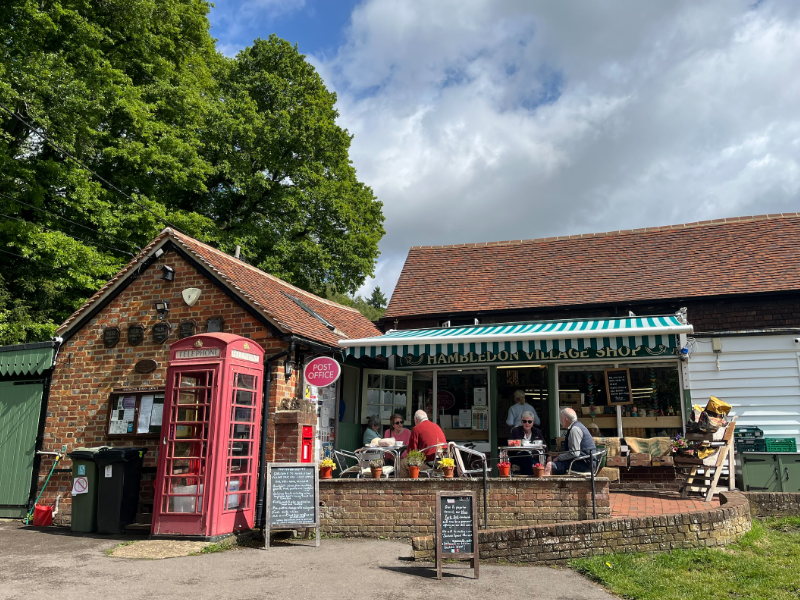
A photo I took at Hambledon Village Shop (Surrey) during a Post Office study visit last month.
Coming up
The next few months will be busy for the Plunkett team, including myself! Parliament will return from recess, the new government’s agenda will become clearer and each party will converge to a different part of the UK for their annual conference. Representing and understanding the needs of our membership, who have a better understanding than anyone of the issues that community businesses face, is also going to continue to be a priority.
For more information, please visit the updated Policy page on our website, and if you have anything you would like to raise, then please contact me at policy@plunkett.co.uk.