
In the final edition of our impact series, we focus on how community-owned businesses promote equity, diversity and inclusion by creating welcoming spaces for all.
“This pub is the heart of the village, physically and emotionally. This is a special place.”
These words from Lou, a volunteer at The Maybush Inn in Essex, capture the essence of what community businesses are all about. More than just providers of essential services, they are places that bring people together, foster a sense of belonging and strengthen the social fabric of their communities.
Having a democratic ownership model naturally means that rural community-owned businesses are inclusive, but it is their ongoing commitment to listening and adapting that truly sets them apart. By regularly engaging with their communities and asking whose voices are missing from the conversation, they can shape services and activities that reflect the needs of a diverse range of people, including those who may be underrepresented or vulnerable. In doing so, they help address hidden challenges such as loneliness, isolation and poor mental health, ensuring more people feel connected, supported and able to thrive.
Thinking about inclusivity from the outset
With Plunkett’s support, the community in Curry Mallet in Somerset is working to bring their 200-year-old Bell Inn back into community ownership. Finalists in the ‘One to Watch’ category at Plunkett’s annual awards, the group has already demonstrated a strong commitment to ensuring the pub serves the whole community.
While their village is surrounded by beautiful countryside with a history stretching back nearly 2,000 years, they face many of the challenges common to rural areas, including social isolation, declining local services and limited opportunities for young people. For the community, saving the pub is about much more than reopening a place for food and drink. It is about creating a welcoming hub that supports people of all ages and backgrounds.
Inclusion has been central to the group’s plans from the outset. The Bell Inn is set to provide valuable employment opportunities for local young people, offering a potential first step into the world of work. The group is also exploring a partnership with PROMISE Works, a Somerset charity supporting disadvantaged children and young people, which could see the pub used as a meeting and drop-in space for mentors and mentees. Discussions are also underway with Bridgwater & Taunton College to explore hospitality training opportunities, helping to create new pathways into education, skills development and employment.
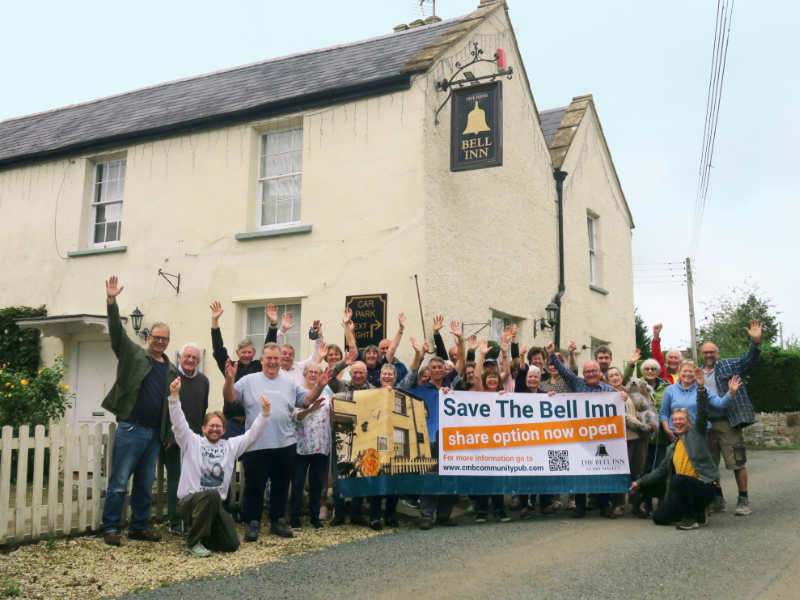
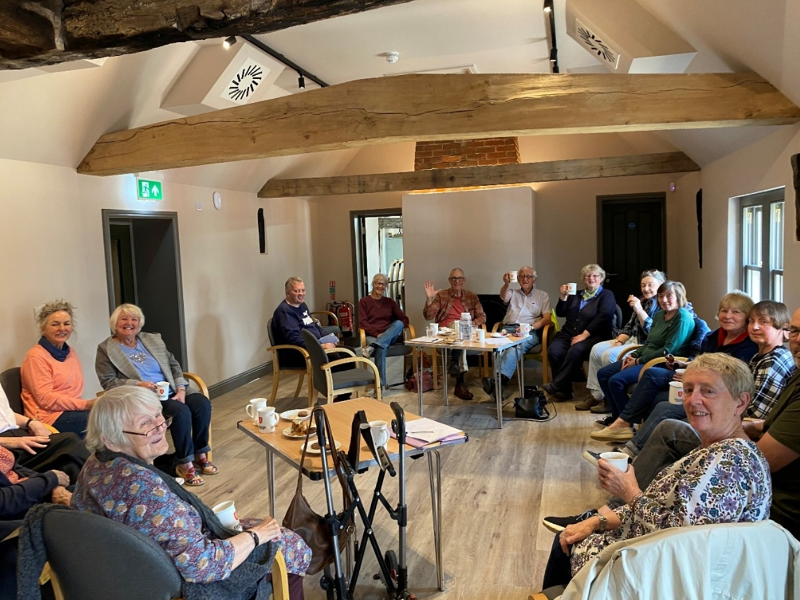
The Activity room!
Putting inclusion into practice
Following a devastating fire in 2013, The George in Wickham Market in Suffolk was purchased, rebuilt and reopened by the local community in 2025. Since opening its doors, inclusion and accessibility have been embedded in its day-to-day operations.
The pub has created employment opportunities for between 15 and 25 young people from the local area, with some staff receiving Dementia Awareness training through Community Action Suffolk.
A key part of The George’s offer is its dedicated Activity Room, which was designed to host social, educational and cultural activities that promote wellbeing and tackle loneliness and isolation. Supported by an employed Community Engagement Coordinator, the space has become a thriving hub for local residents. The first activity held there was a Wellbeing Café, while regular sessions now include Method Fitness for Parkinson’s, an exercise class specifically designed for people living with Parkinson’s disease.
The venue has quickly become a valued community asset. In its first nine months alone, it hosted 268 activity sessions and welcomed more than 3,000 attendees. Accessibility was also considered throughout the building’s design, with dementia-friendly features, appropriate colour schemes and ongoing training for staff and volunteers helping to ensure that everyone feels welcome and supported.
Plunkett’s role in supporting inclusive communities
At Plunkett, we believe everyone should have equal access to the opportunities, investment and recognition that community ownership can bring, regardless of where they live.
One way we do this is through our Impact Officer, who leads a dedicated ‘EDI’ Special Interest Group that brings community businesses together to share ideas, experiences and learn from external organisations. Recent discussions have included intergenerational relationships between employees and/or volunteers, while external partners such as Spectra have shared insights into how community businesses can support care leavers and other underrepresented groups.
We also use national events to champion the inclusive impact of community ownership. Earlier this year, at Anthropy, we hosted a panel discussion titled Are We Calling Last Orders on Rural Youth?.
Luca from Westbury Community Shop & Café reflected on the impact of being involved in a community-owned business: “Being able to communicate with people of different ages, in a kind environment that you don’t get anywhere else, has had such a huge effect on my life.” Tilly from The Auctioneers Arms shared a similar experience: “As I got to know the customers and staff, it helped me come out of my shell and deal with my anxiety.”
We are proud to champion diversity and inclusion to ensure everyone can access, benefit from, and participate in, community ownership in rural areas.
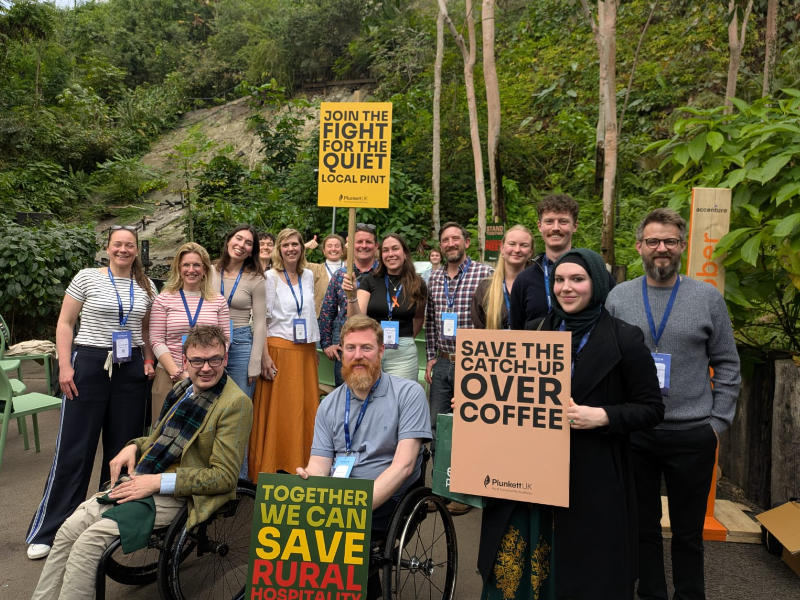
Group photo after the panel session – Anthropy 2026
Read our 2026 Impact Report
It may be the end of our impact blog series, but you can still explore all five areas of impact in our 2026 Impact Report which is packed with statistics, insights and inspiring case studies from community businesses across the UK.
If you have any questions about our support services or need help setting up or running a community-owned business, we’d love to hear from you. Contact us at info@plunkett.co.uk or call 01993 630022.