
Our Communications Officer, Michael Wolverson, speaks with Jane Marsh from The Salusbury Arms in North Wales about the challenges facing pubs today and how community ownership is helping create stronger, more resilient rural communities.
Rural communities across the UK are facing growing challenges. Rising costs, pressure on local services, social isolation and the loss of valued local amenities are making it harder for many places to remain vibrant and connected. These challenges are reflected in the hospitality sector, where pubs continue to disappear from villages and small towns. Figures reported by CAMRA in August revealed that 794 pubs had closed during 2026, with 82 permanently lost through demolition or conversion to another use.
Yet community-owned pubs are proving that there is another way. More than places to eat and drink, they are creating opportunities for people to connect, supporting local economies and providing services that help communities thrive.
Their success reinforces a key belief at Plunkett UK: when communities have ownership over the assets that matter to them, they are better placed to create a stronger future.
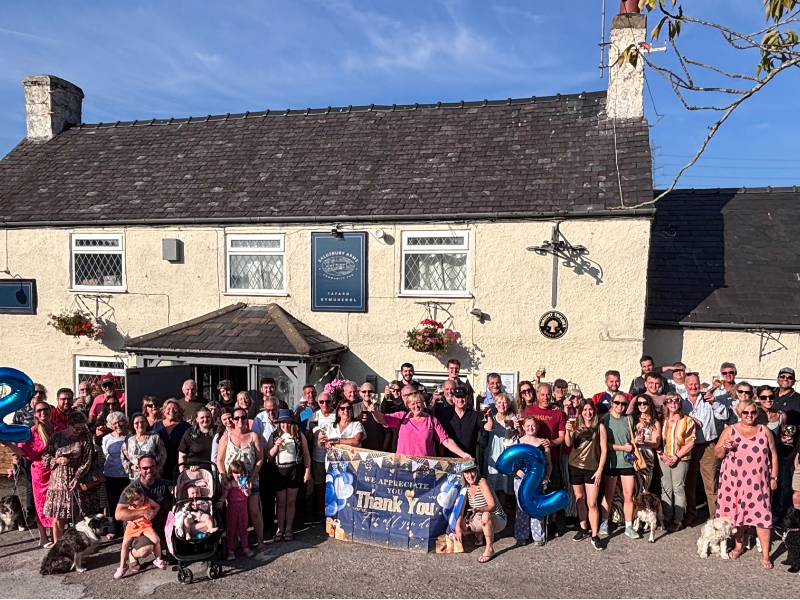
The Salusbury Arms, Tremeirchion
Why pubs are struggling and why it matters
Rising energy costs, wage pressures and general inflation have made trading increasingly difficult. At the same time, consumer habits have shifted. Supermarkets offer cheap alcohol, and people are understandably watching their spending.
But economics alone does not explain the scale of the closures – there is also a perception issue. As Jane Marsh of The Salusbury Arms, a community-owned pub in Tremeirchion, North Wales, explains, pubs have too often been framed as declining leisure venues: nostalgic, alcohol-centred and increasingly irrelevant.
That narrative has consequences. It shapes public attitudes, funding decisions and policy priorities, obscuring a growing reality on the ground: community-owned pubs are some of the most important social assets in the country.
“They’re places where people meet, where people talk, where people connect,” Jane says. “In a polarised society, we can’t afford to lose those spaces.”
Community ownership allows pubs to move beyond purely commercial hospitality and deliver wider social value rooted in local need. From tackling isolation and supporting wellbeing to creating local employment and services, community pubs demonstrate how community businesses can help build more resilient, prosperous and connected rural communities.
Invisible need in rural communities
Jane explained that one reason for this misperception is that rural deprivation often goes unseen. Villages may appear prosperous, characterised by home ownership, low crime and scenic surroundings while experiencing deep structural disadvantage.
Poor public transport, unreliable infrastructure, digital exclusion, limited services and ageing populations frequently overlap. Residents often pay more for essentials while receiving less support. Loneliness and isolation are common, particularly among older people.
At The Salusbury Arms, relatively simple initiatives unlocked disproportionate impact. A chair-based yoga class for over-80s evolved into practical fall-prevention support. One participant later credited the class with helping her get back onto a bed after a fall at home, avoiding hours on the floor and a potential hospital admission.
Such outcomes rarely appear on balance sheets, yet they save public money, preserve dignity and help people maintain their independence for longer. They also demonstrate the wider role community businesses can play in improving quality of life and strengthening the resilience of rural communities.
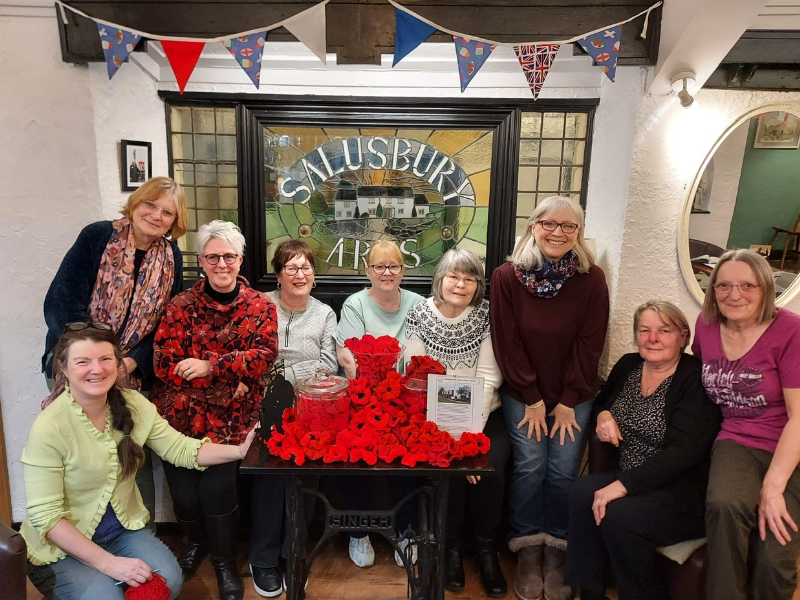
Volunteers at the poppy stand
From saving a pub to sustaining a community
Establishing a community-owned pub is never easy. Communities must create legal structures, governance arrangements, constitutions and sustainable business models. Volunteers, often without prior experience, must learn quickly while balancing family, work and other commitments. This is where many projects risk losing momentum.
Jane recalls that moment clearly:
“We got down to two people on the steering committee at one stage. We were passionate, but we didn’t know how to set up a charitable organisation or whether we were doing things the right way.”
This is where Plunkett’s role is fundamental
Supporting communities through these challenges is a vital part of our strategy to strengthen the community business movement and create stronger communities across the UK. Alongside specialist advice, training and peer-learning opportunities, Plunkett provides communities with proven templates, model rules and practical tools that significantly reduce the complexity of establishing a community-owned business. Rather than starting from scratch, groups can build on approaches that have been tested and refined through decades of experience.
For communities, this means projects can progress more quickly, retain more of their resources for the asset they are seeking to save and move into community ownership with greater confidence. By reducing costs and providing a framework that can be adapted by communities across the country, Plunkett’s support also helps create a stronger and more scalable community business movement. Importantly, it also shows policymakers that community ownership is not a “too difficult” solution, but a proven and replicable model that can help communities save and sustain vital local assets.
At Plunkett UK, we have been supporting communities to take ownership of vital local assets since 1919. We know this model works because we see it succeed time and time again. According to Plunkett’s latest Impact Report, community-owned businesses have an exceptional long-term survival rate of 94%, demonstrating the strength and resilience of a model rooted in local ownership and community benefit.
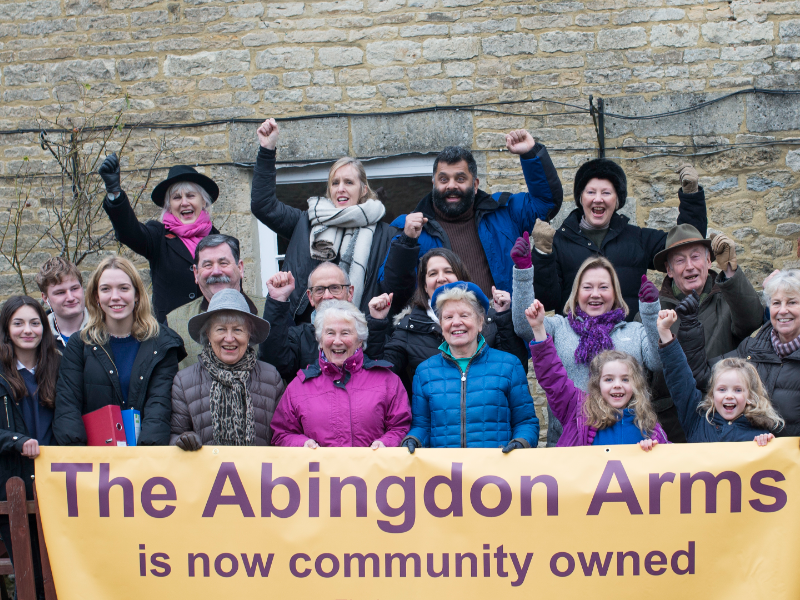
The Abingdon Arms, Oxfordshire
What needs to change and why it matters
Community pubs are already delivering significant public value. They create opportunities for social connection, support local economies, provide services that communities rely upon and help address some of the biggest challenges facing rural Britain.
The evidence is clear: community pubs work because they are inclusive, trusted and embedded in everyday life. With the right policy environment, they could do even more.
Our call to action is clear: policymakers, funders and partners must recognise community pubs as essential social infrastructure, not optional leisure businesses, and back them accordingly.
By supporting communities, influencing policy and championing community ownership, we can help ensure these vital spaces continue to connect people, strengthen local economies and create a more resilient future for rural Britain. At Plunkett UK, we will continue to amplify the voices of communities on the ground and advocate for a future in which community-owned businesses are empowered to thrive, not simply survive.