
In the first of our five-blog series, we focus on ‘Boosting the Local Economy’, one of the five impact areas highlighted in our 2026 Impact Report that showcases the strength, resilience and value of community-owned businesses.
Did you know that for every £1 spent with a community business, 56p stays in the local economy?
It is just one of many insights featured in Plunkett UK’s 2026 Impact Report, which demonstrates the contribution community businesses continue to make, despite ongoing economic challenges.
Community businesses that Plunkett supports are committed to sourcing goods and services locally, creating a circular economy in the places they exist.
In practice, this might mean stocking products from local suppliers, creating and selling their own merchandise, or working with local contractors, artists and tradespeople. By keeping wealth, skills and opportunities rooted in local places, community businesses create stronger local economies that are better placed to adapt and thrive.

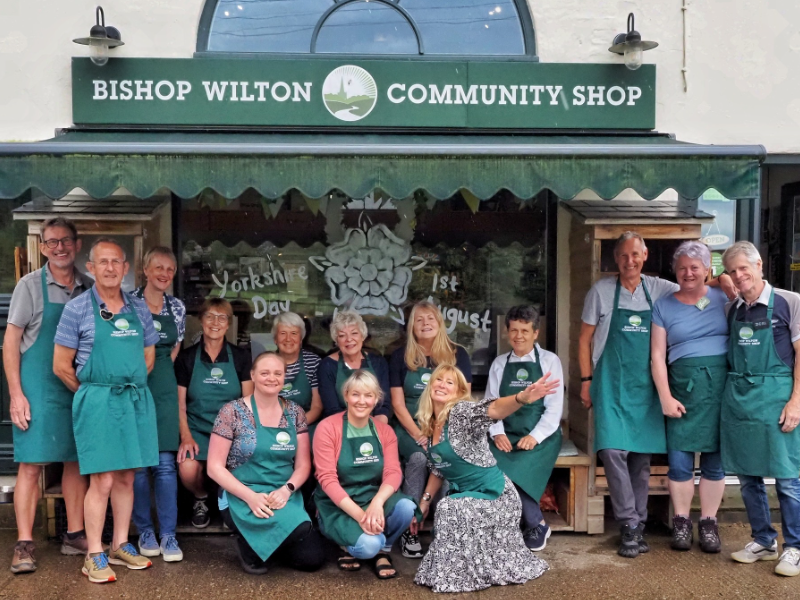
Volunteers outside the shop!
What does this look like on the ground?
As well as sharing statistics that demonstrate impact, our Impact Report also highlights examples from our community business members that are putting these principles into practice every day.
One such example is Bishop Wilton Community Shop in Yorkshire. The community-owned shop and café prioritises ‘keeping it local’ wherever possible, from daily essentials and gifts to produce sold in its café. By actively seeking local alternatives, it has helped several village-based businesses grow, with home bakers and growers expanding into larger kitchens and reaching wider markets.
Strong relationships with local suppliers also help keep core food items affordable, ensuring the shop supports both local livelihoods and household budgets.
At Plunkett UK, we celebrate this area of impact at our annual Rural Community Business Awards through the Keeping it Local Award, sponsored by Co-op – a key partner of ours through the Co-operative Retail Society Network. Bishop Wilton’s dedication to supporting local suppliers and producers saw it crowned the winner of this award in 2025.
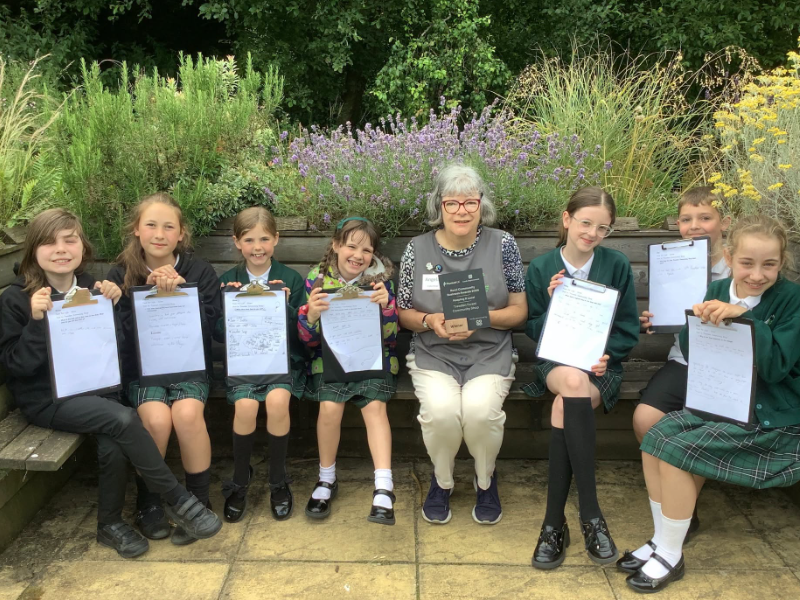
Shop volunteer with Trawden Forest Primary School children
A community hub
This year, the award was presented to Trawden Community Shop in Lancashire.
Run by around 90 volunteers, the shop works with more than 20 local suppliers, providing reliable income streams that help sustain nearby businesses while also supporting smaller producers and individuals selling handmade goods. Its commitment to sustainability includes refill options, additional recycling facilities and milk sold in returnable glass bottles.
Alongside its retail role, the shop has become an important community hub, creating inclusive volunteering opportunities for people of all ages and abilities. Volunteers with additional needs are actively supported, including a wheelchair user who contributes to food preparation, while an 82-year-old volunteer creates fabric bags that are sold in the shop. The business also hosts Duke of Edinburgh participants and work experience placements, helping these young people build skills, confidence and a sense of belonging.
Working with a local school, volunteers helped children learn about the role the community business plays in village life and introduced them to the wide range of locally-produced items available to buy, including jams, butter, milk, honey and crisps. The children then purchased sausages sourced from local farms (and then sold in the shop) and cooked them at school – a farm to fork journey!
Plunkett’s role
Through dedicated events, webinars and peer-learning opportunities, Plunkett helps community businesses explore ways to increase their impact across all five areas highlighted in our report.
Earlier this year, for example, we hosted a webinar focused on Boosting the Local Economy. Members heard from Nick Weir of the Open Food Network and learned directly from Bishop Wilton Community Shop, which shared practical examples of how sourcing locally and building relationships with local producers can strengthen both businesses and communities.
Whether it is employing local people, partnering with nearby suppliers, supporting local producers or helping volunteers develop new skills, community-owned businesses have many ways to contribute to local economic growth. Plunkett’s role is to ensure they have access to the knowledge, networks and expertise needed to maximise that impact.
How to navigate our member hub
Explore the 2026 Impact Report
This is the first blog in our five-part series exploring the impact of community-owned businesses. Over the coming weeks, we’ll be taking a closer look at the remaining four impact areas and sharing more examples from across our network.
In the meantime, you can read the full 2026 Impact Report, which provides further statistics, insights and case studies from community businesses across the UK, while also highlighting how Plunkett advocates for and supports the sector.
If you have any questions about our support services or need help setting up or running a community-owned business, we’d love to hear from you. Contact us at info@plunkett.co.uk or call 01993 630022.