
Hear from our new Policy Manager, Ian Young, who shares his perspective on the barriers facing rural community businesses – and the opportunities to overcome them.
I have recently joined Plunkett UK as the new Policy Manager, and I’m hoping to be able to make a positive contribution to the sector, and support community businesses in what is a difficult environment where lack of capital and connectivity create a rural disadvantage.
I’ve joined Plunkett from the social impact investment sector, where I saw close up the impact that groups can make when they are embedded into their community.
Community spaces operated by local people are vital in supporting local economies but, most importantly for me, they can create warm, social public spaces which help improve people’s lives. The data shows that rural businesses face unique threats, and the individual businesses I’ve spoken to in my short time at Plunkett have echoed this.
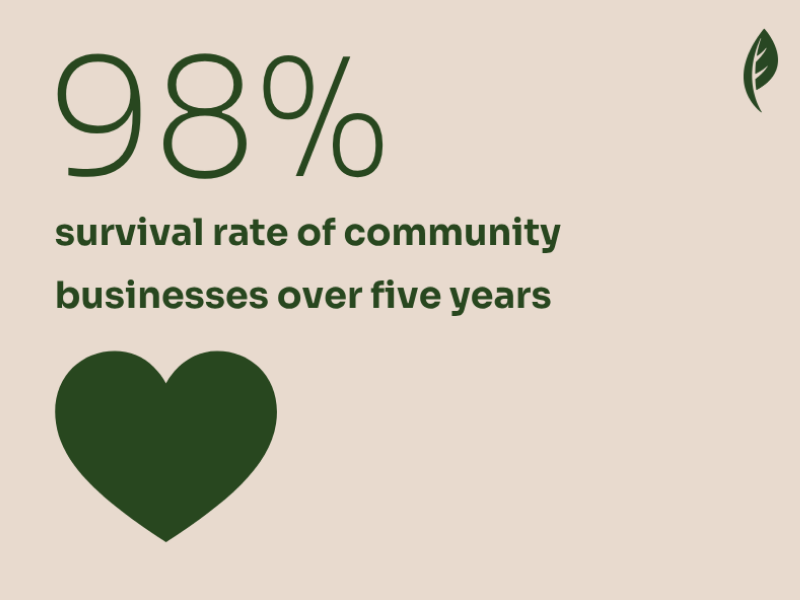
Community ownership is a model which clearly provides substantial benefits to these communities, with organisations which enter into community ownership structures demonstrating a long-term resilience of 98%. There are substantial external factors which make running these business complex, but the community benefit model allows these services to run with confidence that they will be there for local people in the future.
Some of our members are running the only shared space in their previously busier towns or villages, making them integral to the fabric of these places. These last remaining spaces are amongst those we are looking to support through our Save Rural Hospitality Crowdfunder, which is building our capacity to support with governance, business plans and community engagement, as rising costs threaten their balance sheets and ability to provide services. With this in mind, amongst my priorities is looking at how taxes could be reformed to view community businesses through an impact lens rather than a commercial one.
Another area of unfairness is that some community businesses are taking on the burden of hosting some public services, such as Post Offices, which can run at a loss and have to be subsidised. These are small organisations which are operating on limited resources, and often by volunteers, some of whom I have already met to discuss the issue with. I want to work to ensure that in these instances, there is flexibility to ensure that services can continue without placing exorbitant costs on our members.
I mentioned the difficult environment, but on the flipside it’s good to be able to have joined Plunkett at a time when the sector has secured a big win in the passage of the English Devolution and Community Empowerment Bill, embedding the right for communities to buy important assets. This shows what can be achieved by the sector pulling together, and I look forward to doing my bit to help implement it. It has also been great to be introduced to colleagues who have been working in the devolved nations, so Plunkett can support those in Scotland and Wales campaigning for new legislation in Cardiff Bay and for improved legislation in Holyrood.
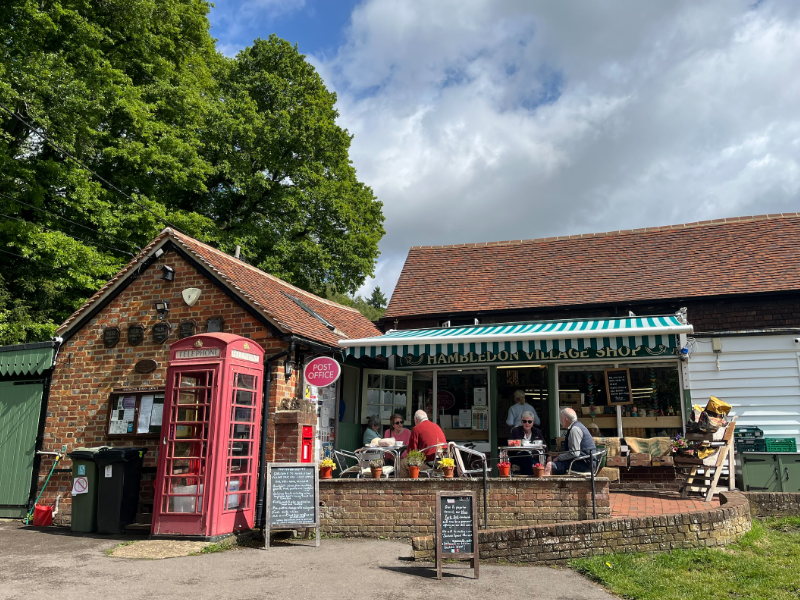
A photo I took at Hambledon Village Shop (Surrey) during a Post Office study visit last month.
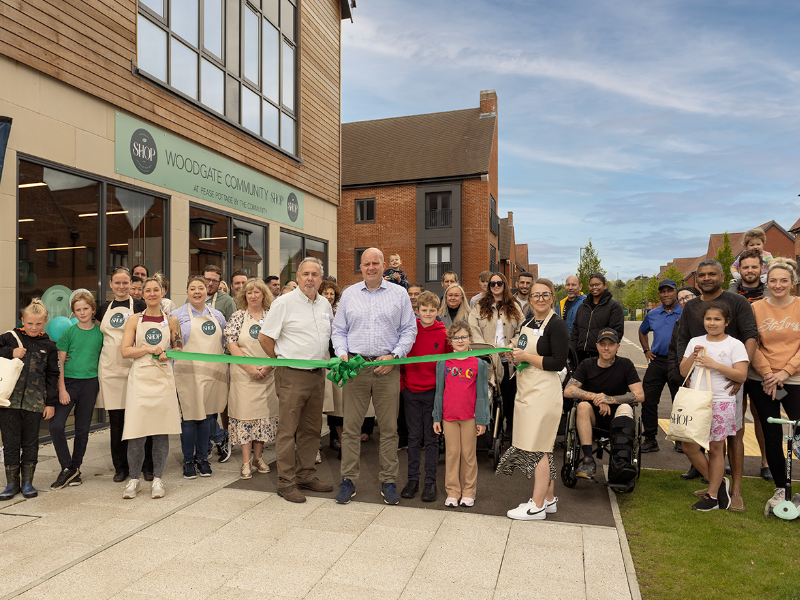
Woodgate Community Shop, located within a housing development in Pease Pottage, was supported by Plunkett in partnership with Thakeham
There is also opportunity in planning. Several of my colleagues are already working hard on the potential for community businesses to be embedded in all new-build developments. This can be a vital strand of community-building or ‘placemaking’, ensuring that much-needed new housing stock is linked directly to spaces which encourage social cohesion, jobs and training opportunities and services for locals. Placemaking work like this is vital to ensure that communities are more than just a collection of dwellings and instead help to improve quality of life for residents.
While these are my early focus areas, my job is to learn from our members, gathering what they need and what is making the operating environment difficult. With this knowledge Plunkett can work with government to make sure that existing community businesses can continue to survive but also that it is easy, simple and worthwhile for other communities to take control of businesses or sites close to them.
Join our movement – become a member today
Membership is the cornerstone of our work at Plunkett UK. Without our members, we wouldn’t be able to represent the interests of rural communities or champion community ownership across the UK with the media, funders, policymakers and other stakeholders. That’s why it’s so important that we continue to hear directly from you.
I encourage members to get in touch with the trends they’re noticing or any concerns that may need political attention – your insight helps ensure we can represent you effectively and advocate for what matters most.