
During Great Big Green Week (6-14 June), we’re celebrating how Plunkett and community businesses are driving and inspiring environmental impact.
This year’s theme focuses on the power of people coming together to do good for the environment – recognising the collective efforts that make neighbourhoods better places to live, protect the natural world we value, and show decision-makers across the UK that positive change is possible when we act together.
At Plunkett UK, we support community-owned businesses to tackle climate change, and we see the impact of this work every day. From installing solar panels to reduce reliance on fossil fuels, to running refill shops that cut plastic waste, these enterprises are committed to building a more sustainable future.
Our 2026 Impact Report, launched during the same week, highlights that last year 96% of community businesses took some form of climate action, while 92% worked with local suppliers – reducing food miles and shrinking their carbon footprint. More than a third have also taken steps to cut energy costs.
With Plunkett’s support, rural community businesses are investing time and resources into initiatives that deliver meaningful environmental benefits. Sustainability is not an add-on – it’s integral to how they operate, driven by a commitment to the greater good rather than commercial gain.


Powering change in rural Hampshire
Woodgreen Community Shop and Café is taking practical, evidence-led steps to cut its environmental impact while strengthening its role at the heart of the village. LED lighting and efficient refrigeration radically cut energy use, while a £24k grant-funded solar and battery system now generates around 30% of its annual electricity. It means that during power outages, the shop and café has continued trading, with a warm, safe space for residents.
Unavoidable food waste is diverted to local animal feed, strengthening relationships with landowners and cutting landfill. Wastage represents just 0.4% of turnover, well below the 2% benchmark advised by Plunkett. Data drives decisions, including replacing in-house baking with a local supplier when energy use proved too high – and this keeps sustainability transparent, community-led and built to last.
Leading the way in water and sustainability
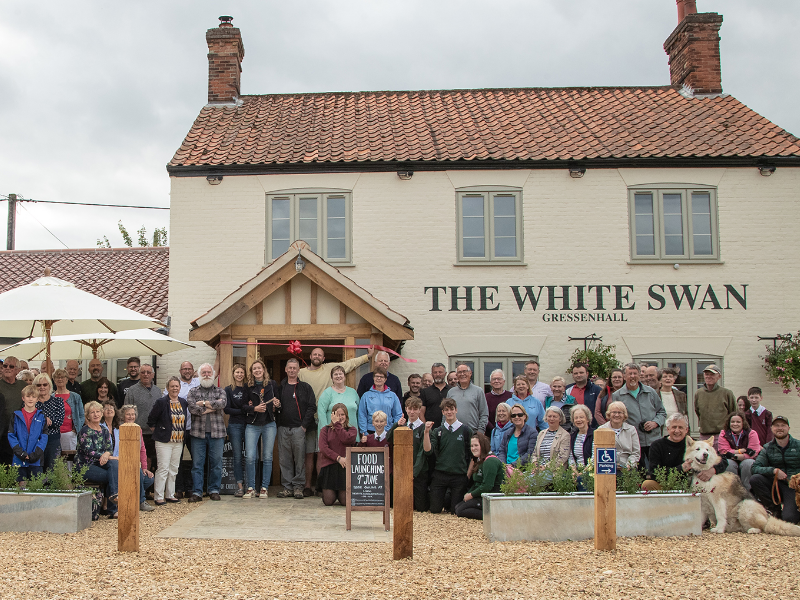
Another inspiring example is The White Swan in Gressenhall, Norfolk, which became the first UK pub to earn a Waterwise Checkmark. As part of the assessment, the pub demonstrated a thorough and proactive approach to water management. Measures include dual-flush toilets, smart metering to monitor real-time usage and prevent waste, and water butts to collect rainwater for outdoor use. A detailed action plan also supports benchmarking, ongoing monitoring, leak prevention, kitchen efficiency, and engagement with both staff and customers.
Alongside this, the pub has installed a system to collect kitchen fats, oils and grease – transforming 256 litres of waste oil into 286kWh of sustainable energy each year. The community-owned pub has also introduced a free bicycle repair service, encouraging more people to choose cycling as an alternative to car travel.

Supporting communities to take action
It’s clear that our membership network cares deeply about the future of our planet – and at Plunkett, we take that responsibility seriously. Our team in Woodstock works hard to create events and partnerships that empower community businesses to take meaningful environmental action.
We host a range of online sessions designed to inform and inspire, from webinars with not-for-profit energy brokers to discussion groups exploring key environmental challenges. These spaces bring people together to share ideas, build knowledge, and develop solutions that drive real change.
Since January 2025, we’ve also run a dedicated environmental special interest group. Topics have included conducting eco-audits of community buildings and preparing for the impacts of climate change already being felt. These sessions have led to the creation of practical resources, now available to Plunkett members through our online library.
Collaboration is central to this work. By partnering with expert organisations, we ensure the information we share is relevant and impactful. For example, Scottish charity Verture led a session on climate change adaptation, helping communities prepare for challenges such as hotter summers and wetter winters. Meanwhile, Utility Aid – drawing on over 20 years of experience supporting charities and not-for-profits – has worked with businesses to reduce energy costs, delivering both financial and environmental benefits.
Read our 2026 Impact Report
Environmental action is one of our five key impact areas, highlighted in our recently published report. This year’s edition explores the vital role we play in helping communities turn local ambition into lasting benefit, and the impact delivered by community-owned businesses across the UK.
Click the button below to read the report. If you’d like to share how your community business is tackling climate action, or if you’re part of an organisation interested in working with us to support our membership network, please get in touch by emailing communications@plunkett.co.uk.