
With challenges rising for community-owned shops, adaptation is essential. Our Future of Rural Retail report sets out the steps communities should consider taking to thrive.
Across the country, around 450 community owned shops are acting as vital lifelines for the communities they serve. Many have been trading for decades, and the sector continues to expand, with approximately 15 new shops opening each year. These shops are known for their resilience, boasting an impressive 94% long-term survival rate and delivering significant social and economic impact.
But times are changing, and the challenges facing community-owned retailers are growing; supermarket delivery services have surged, online shopping has become effortless in a post pandemic world, and rising delivery charges mean that, even in rural areas, traditional “convenience shopping” isn’t what it used to be.
At Plunkett UK, we are proud of the impact rural community-owned shops have on their local communities, especially their ability to evolve and adapt.
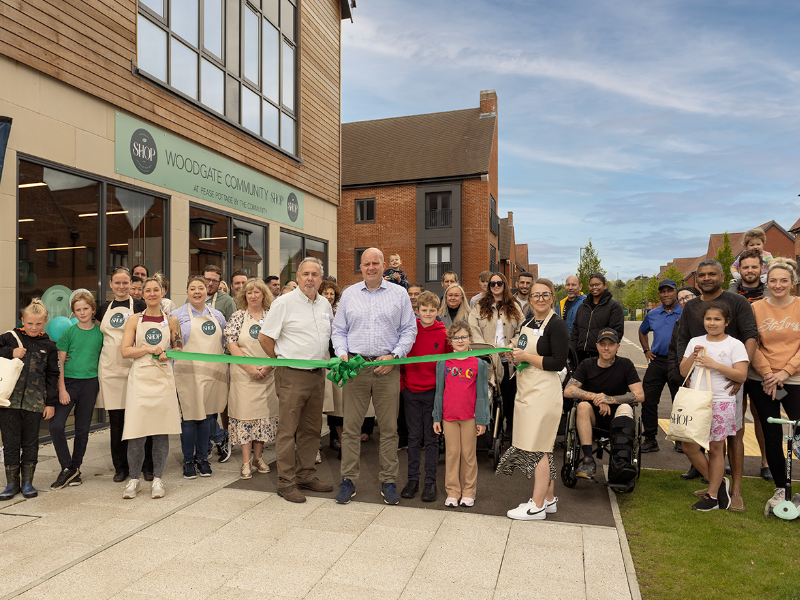
Woodgate Community Shop, Sussex
So, if things are changing, what shall we do now?
With new shops opening every year, it’s vital that they reflect the needs of the people they serve, while long established shops must take time to reflect on what the future looks like and how they can respond to external pressures.
But how? Last year, Plunkett launched The Future of Rural Retail Report. Drawing on our experience of community retailers and the insights of a dedicated taskforce of community shops, expert advisors and industry professionals, four clear scales emerged for community-owned retailers to consider in their future planning.
As the report highlights: “Understanding where each community shop currently sits on the four scales, and where it might have an opportunity to evolve by moving left or right along each scale, is pivotal to staying relevant, inclusive, impactful… and profitable.”
1. Range – Differentiation is key
On range, the scale spans core convenience products on the left, to a specialist, differentiated offering on the right, which sets the business apart from a mainstream supermarket.
Community shops already offer something unique, particularly in rural or isolated areas, through locally-sourced products, refill options, and even their own branded goods. But relying solely on convenience depends heavily on the level of competition nearby; very rural areas may thrive with a convenience led model, while others may need to go further.
Most community shops sit somewhere in the middle of this scale. However, there are inspiring examples of shops that have gone all in on differentiation by ditching the Heinz and Walkers altogether and becoming specialist destination retailers, such as the Green Gram Refill Shop in Hampshire and Fordhall Farm Shop in Shropshire. For all but the most remote community shops, a pure convenience offer is no longer compelling, and the real opportunity lies in refining the basic range and introducing products that appeal to a wider customer base.
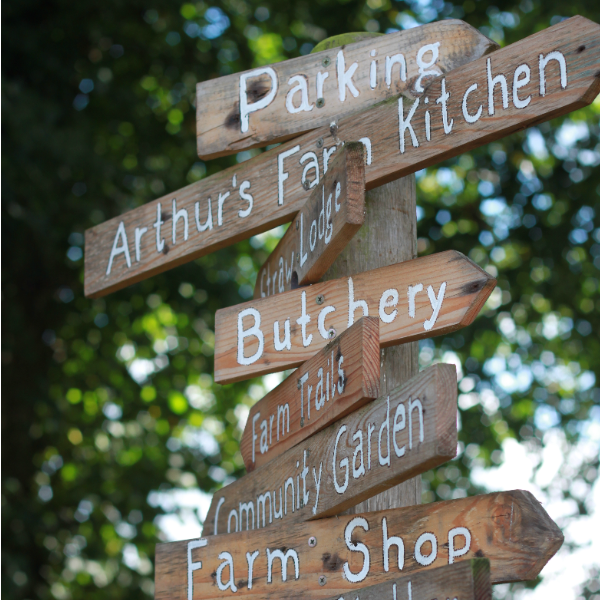
Fordhall Farm sign

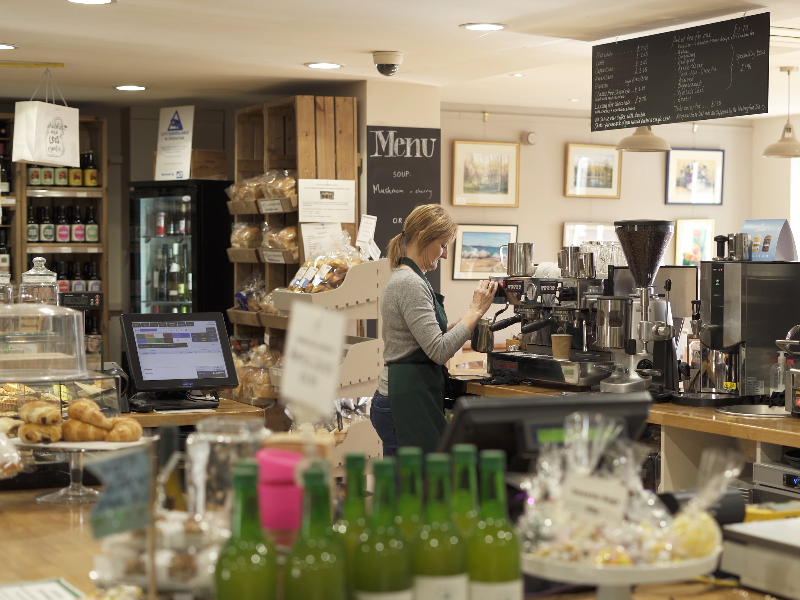
Hampstead Norreys Cafe
2. Proposition – Creating a positive social impact
When it comes to proposition, the scale begins on the left with the pure shop: simply a place where products sit on shelves, offering straightforward convenience. On the right sits a much more café orientated model which still includes retail but becomes a destination which creates a far better overall shopping experience.
Although this approach is often stronger financially (as the report notes, you’d need to sell a lot of tins of beans to make the same profit as one cup of coffee), its real strength lies in driving customer loyalty and footfall. By offering a warm, welcoming place for people to meet and socialise, community shops create powerful social impact. It’s no surprise that many new community shops plan a café from the very beginning, and long established shops are adapting too.
Hampstead Norreys, a Plunkett member for over 15 years, began as a simple shop, then added a small seating area, and now operates a fully functioning café with a working kitchen. However, even a couple of tables or a small seating area with a self service coffee machine can transform a shop into a genuine community hub, giving people a sense of belonging and improved wellbeing.

3. Services – A mini high street in their own right
Community businesses excel because they match their services to the needs of their community. On the left hand side of this scale sit the basic services that most community shops already offer, things like a community noticeboard or ticket sales for local events.
But many shops are now innovating, introducing a wide range of services that respond to evolving local needs. These include, pop up mobile banking, prescription pick ups, toy libraries, repair cafés, and even drop in sessions with healthcare professionals. Uig Community Shop, a very remote shop on the Isle of Lewis, even operates its own launderette and petrol station.
These examples show how relevance is maintained by being so much more than a shop can reinforce the importance of community consultation. Understanding what your community needs, and then providing it, can transform the sustainability of the business.
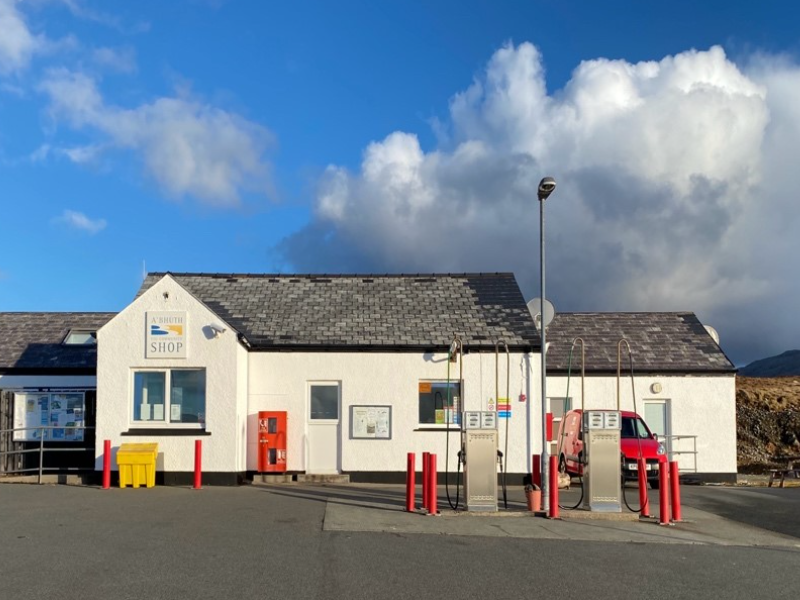
Uig Community Shop, Isle of Lewis


Volunteers at Westbury Community Shop and Cafe
4. Impact – Being the heart of the community
And finally, the impact scale. This is perhaps the hardest to articulate and certainly the least easy to quantify, but it is arguably the biggest differentiator for community shops and a real opportunity to strengthen their position at the heart of the whole community.
At Plunkett UK, we often talk about impact and how community businesses make a difference – but what does that really mean? On the left hand side of the scale sits the basic “everyone’s welcome” approach that many businesses adopt: ensuring people feel supported, safe, heard, and able to enjoy a positive shopping experience. On the right hand side, however, is a much more proactive approach to building inclusivity and impact. This is where community groups actively seek out partnerships with organisations, schools and local services.
It starts with asking, “Who is missing?” and we have seen great case studies of groups doing this. Westbury Community Shop in Buckinghamshire, for example, partners with Furze Down School to offer work experience to young people with disabilities, helping them build confidence. Creating positive social impact and becoming a diverse, equitable and welcoming community hub is not only good for individuals, but also for business. The more people who feel included, the more likely they are to visit regularly, feel comfortable in the space, and bring others with them. This strengthens both community cohesion and the shop’s long term sustainability.