
Climate change is here – how prepared is your community business? Our Impact Officer, George Ogier, shares insights from our latest environment special interest group with Verture on building climate resilience

In January 2025, thanks to a partnership with the Dulverton Trust, Plunkett UK began delivering a series of special interest groups focused on equality, diversity and inclusion (EDI) and tackling climate change. This programme of events continues into 2026, and we started the year with our latest environmental session.
Previous sessions have explored the value of environmental action for community businesses and how to carry out an ‘eco audit’ of community buildings. For our most recent event, we were joined by Verture, a Scottish charity that supports organisations, businesses, and communities to adapt to the impacts of climate change.
During the session, attendees had the opportunity to:

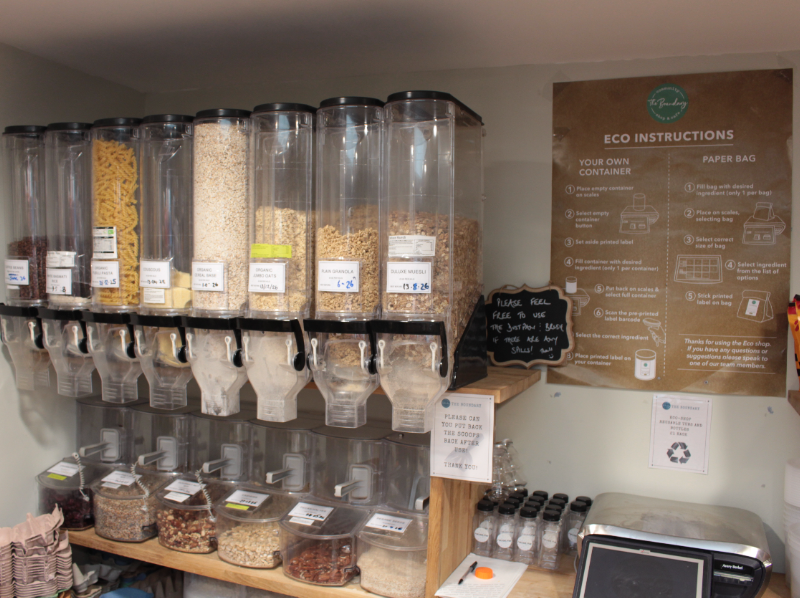
Refill station at The Boundary Community Shop, Hampshire
It is noticeable how our weather is changing. Hotter summers, wetter winters and more intense storms are becoming part of everyday life, and these changes can create challenges for all businesses, including those that are community-owned. Damage to buildings, disrupted supply chains, and pressures on staff and volunteer wellbeing are just some of the issues that are becoming more common. Many of these changes are now unavoidable, which means businesses need to understand the risks they face and put plans in place to continue operating effectively.
This is where adaptation becomes essential. Adaptation refers to any action taken to reduce vulnerability to the actual or expected impacts of climate change. Alongside this sits mitigation, which focuses on reducing or preventing greenhouse gas emissions. Both approaches help build stronger, more resilient community businesses. Creating a contingency plan for when staff or volunteers cannot travel to work is an example of adaptation, while reducing food waste is a mitigation measure. Some actions, such as strengthening and shortening supply chains, support both aims at once.
Verture introduced their helpful framework for thinking about adaptation: the ‘5 Ps’: People, Products & Services, Premises, Processes and Place. We explored each area and discussed practical steps community businesses can take to prepare for extreme weather.
Examples included:
In their closing reflections, Verture emphasised that adaptation is a vital part of the transition to a greener economy and to building resilient local communities. Its importance will only grow in the coming years, and taking early action is far more effective than reacting once problems arise. A range of tools and resources are available to help community-owned businesses take locally led adaptation action, and Plunkett UK will continue supporting members on this journey throughout 2026.
Next steps…
You can find tools of this nature, including all the slides and links used in this session along with other useful resources by visiting our Member Hub. If you aren’t a Plunkett UK member, you can find out more about joining the growing movement by clicking the button below.
If you have any questions regarding matters covered in this blog, or any other queries pertaining to your community business, please email info@plunkett.co.uk or call 01993 630022.