
Read how the community in Stoke Goldington has been held back by current legislation in its efforts to secure The Lamb – and why the new Community Right to Buy offers new hope
The Lamb in Stoke Goldington, Buckinghamshire is a typical local pub in a predominantly rural village. It has served the community for over 100 years and is the only remaining pub there. Having had a previously successful trading history, the impact of austerity and the pandemic took its toll and off the back of the tenant retiring, the owners, a local family, decided to close the business and realise the value of the asset – a registered Asset of Community Value (ACV).
However, the shortcomings of the Community Right to Bid legislation resulted in an uncomfortable stalemate – instead of providing a mutually beneficial opportunity for the owners to sell to the community during a moratorium at a fair price, both sides were left frustrated and unable to progress, leaving the pub closed and a community grieving its loss. Owners have been holding out for a maximum price, and the community holding on to an independent valuation, with a seemingly unbridgeable gap.
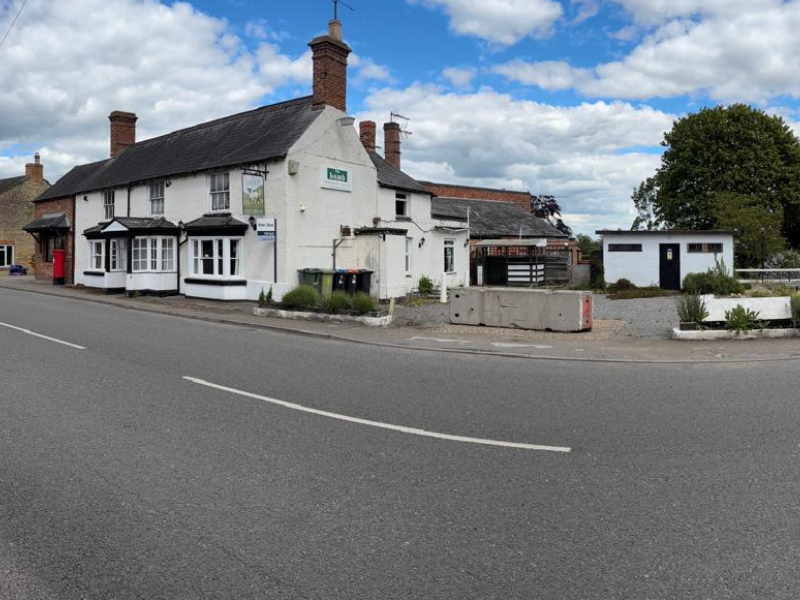
Will the changes brought about by the recent English Devolution Act, and the strengthened Community Right to Buy, not Bid, prove to be effective in overcoming this stalemate, and finally enable the community at Stoke Goldington to now buy the pub at a fair price?
Nick Allen and Stacey Rawlings from The Lamb Steering Group share their reflections.
What have been your frustrations with the previous set-up?
The effectiveness of the Community Right to Bid process has been hampered by the fact that there are no real impacts to an unwilling seller to encourage them to have meaningful engagement in the Asset of Community Value process.
The six-month moratorium has not been a deterrent, and I suspect our experience is not unusual where an owner puts the property on the market and then bides their time until the six-months has expired. Former pubs would probably take at least six months to find a suitable commercial buyer, or for an owner to put it on the market to sell for an alternative use in any event. The local community has had no ability to influence that process.
The marketing process was not strictly controlled and only really had a time limit governing it, without any rules on how a property should be marketed and what sets the value.
What could have made the difference is to require a seller to market a property (including advertising with a specialist commercial agent) for its current use value only during that six-month period and only when no suitable bids were made at the current use value should it be possible to sell to another.
If a suitable bid was made, the seller could sell to that interested party (either a community group or another). An enhanced or inflated marketing value should only be used to advertise a property when planning permission has already been obtained for an alternative higher value use. Otherwise, there is the issue we have where the sellers’ expectations are based on a theoretical planning opportunity that has not been proven and may or may not exist.
The fact that sellers could opt to subdivide properties to sell off in separate lots also causes issues and, in our case, has created an inflated asking price.
An owner will always see upside from a development perspective and, given that differential, then will be prepared to sit on the pub as an ‘investment’. Without all the facts the basic premise is that it is worth £240k now or potentially £500k+ with planning permission to develop residential plots in the future.
If there is a five-year delay waiting for an ACV listing to expire, then that is a 100% return over that period (not taking inflation into account) which makes reasonable business sense. The issue is that selling agents may advise owners to just wait it out and provide examples where large pub groups and smaller owners have successfully ultimately developed.
Notwithstanding the fact that it will be a long game and no guarantees they will get planning permission, if an owner does not have to sell, then why would they? There is no incentive or motivation to sell unless they urgently need the money. Unless there mandated costs of leaving it dormant, such as enhanced rates penalties, requirement to maintain to a reasonable standard (the property is unheated and deteriorating with evidence of damp and a part ceiling collapse), a community levy where a community group are willing buyers etc to drive a decision then they don’t have to make one.
How do you view the introduction of a Community Right to Buy?
The change to the Act to bring into play the Community Right to Buy is hugely welcomed as it does introduce a market value check and has the local planning authority overseeing that part of the process.
The fact that qualifying community groups now have first refusal on ACV properties is a significant advantage and enables negotiations with the owner to take place without being hampered by competing interests such as developers and investors. It means that small rural villages such as ours have a genuine preferential position to save an important facility that brings people together and makes a real difference to village life.
The subdivision of property for sale as part of the process will need to be controlled so that piecemeal disposal of an ACV does not create a loophole whereby a local group can only purchase part of a property during the new 12-month period and the rest is held back and may or may not be available for sale.
A car park or beer garden is a key aspect to the success of a public house venture and it is important that these areas are included alongside the main building. Conversely, if these associated areas are to be disposed of separately – without the main building, a community group may be hesitant to purchase a pub car park and garden without any certainty that the pub itself would be made available to purchase in the near future.
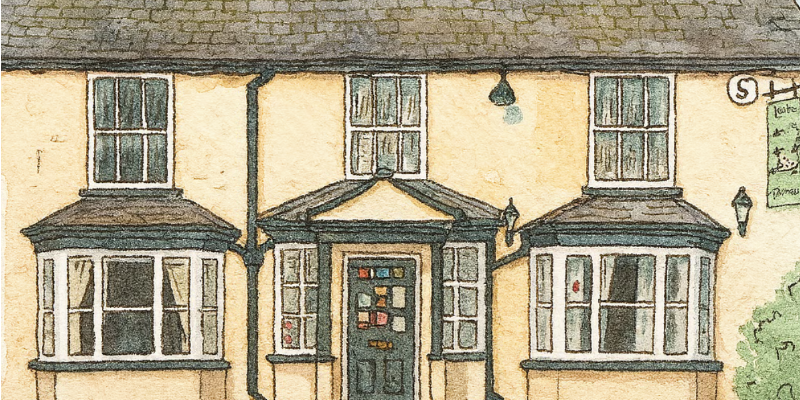
What will this Act mean for you at the Lamb?
The new Act introduces the Community Right to Buy which will help a great deal as we understand that the valuation process will be an existing use value, with no hope value, so sites such as The Lamb that have no planning permission in place should be valued at their current use.
As we have a red book valuation already, we have confidence that our offer is more realistic than the (more than double) asking price on Rightmove.
The key change of doubling the ACV listing to 10 years will also have an immediate impact, plus the fact that the ‘recent past’ criteria has now gone and that we now have a right to appeal if any renewal of the ACV in the future was rejected by the Council. These changes should mean that our owner’s strategy of waiting it out is no longer an easy option.
What we don’t yet know is whether the change to the Right to Buy will help us immediately or in the short term, as we are currently out of the six-month moratorium and in a Protected Period under the old rules, so we will be very keen to see what the transitional rules are for our situation.
We are currently investigating whether we can benefit from it now, or whether we have to wait until the protected period under the old rules has to expire (January 2027) and keep our fingers crossed the landowners do not sell in the meantime.
The other unknown is how the local Council will interpret and implement the new legislation and whether any processes in the legislation will be subject to challenge. We will only know when we, and others, go through this.
Allowing a public house with an ACV to remain empty and rapidly deteriorate makes no sense, there should be a severe financial penalty for owners who allow the property to sit unoccupied.
In our situation you have a terrible eyesore of a property sitting within a conservation area in the heart of our village – with a committed, viable and well-organised local community group eager to complete a purchase with all the benefits that brings to the community.
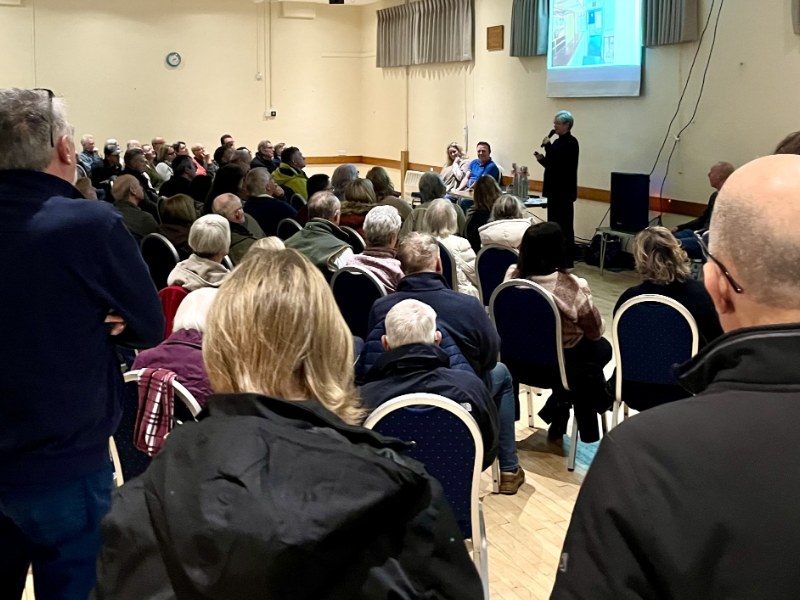
Community open meeting
Plunkett’s response
Our Chief Executive, James Alcock, has written a blog post reflecting on how the passing of strengthened Community Right to Buy legislation marks a hugely significant moment for communities across England.
James looks back on how far we’ve come, the contribution of individuals who have campaigned for community rights, and the collective effort from Plunkett and other organisations to strengthen the framework.